
 English
 Español

Enviado por Melissa Vidito el
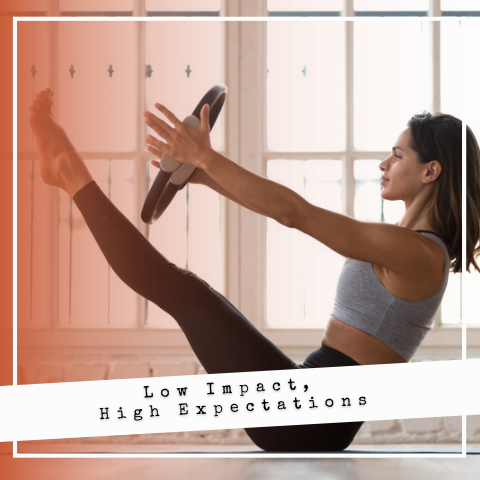
A participant finishes a Pilates sequence, places both feet on the mat, and realizes how much work went into a movement that barely looked like movement at all. Anyone who has taught Pilates or barre knows that moment. A controlled exercise can ask a great deal of the person performing it.
That is a useful starting point for the conversation about low-impact exercise. Clients deserve clear explanations of what a workout offers, and instructors need the programming skills to deliver on those expectations.
The American College of Sports Medicine ranked balance, flow, and core strength fifth among its fitness trends for 2026, highlighting interest in formats such as Pilates, yoga, and barre. For fitness professionals, that interest creates an opportunity to help participants understand how these approaches fit their goals.
Understand the difference between impact and intensity
Impact and intensity describe different aspects of exercise. Low-impact movement generally limits repeated landing forces, such as those associated with jumping. Intensity describes how demanding the work is relative to the person performing it.
An indoor cycling interval can be vigorous without a landing. A loaded squat can challenge strength while both feet stay on the floor. A Pilates exercise can require considerable muscular effort and control without producing the same cardiovascular demand as that cycling interval.
These distinctions matter. Low impact does not automatically mean low intensity, and it does not guarantee that an exercise is appropriate for every participant. The movement, load, and individual still matter.
Start with the purpose of the exercise
Before making a movement more challenging, identify what you want it to accomplish. Are you developing strength, muscular endurance, balance, or coordination? That answer should guide the progression.
For a strength goal, an appropriate increase in resistance may make sense. For movement control, a slower lowering phase may give the participant time to notice and adjust position. For balance, gradually reducing hand support may be useful when the participant is ready.
Each change serves a different purpose. Making an exercise harder to balance does not necessarily make it a better strength exercise. Keeping the goal clear helps instructors choose a challenge that contributes to the intended outcome.
Use progression with intention
Consider a squat. Begin with a comfortable range and a pace the participant can control. From there, you might introduce a brief pause, adjust the range, or add resistance. Change one variable at a time so you can observe the response.
In a Pilates or barre sequence, a change in limb position can alter the leverage and muscular demand. A smaller movement with consistent control may be the appropriate choice for one participant, while another is ready for a longer lever or additional resistance.
Keep the full session in view. Include recovery and enough instruction for participants to maintain the intended technique. A burning sensation or shaking muscles alone cannot tell you whether an exercise is meeting its goal.
Coach participants to recognize progress
Explain what you want participants to notice. Cues such as “Lower with control,” “Keep your pelvis steady as the leg moves,” or “Choose a resistance that challenges you while you maintain your technique” give them something specific to practice.
Then help them recognize improvement. Perhaps they use more resistance, move through a comfortable range with greater control, or need less support during a balance exercise. Those observations make progress tangible beyond sweat or soreness.
Low-impact programming can be demanding, approachable, and adaptable. Its value depends on the match between the exercise, the person, and the purpose.
Expand your programming skills
Learning another format gives instructors more ways to meet participants where they are and help them progress. FiTOUR® Pilates, Barre, and Aqua certifications offer opportunities to expand your education and explore additional approaches to movement.
Explore FiTOUR® certifications to build on what you teach and bring more informed choices to your next class.
Resources: ACSM 2026 fitness trends | ACE guidance on purposeful exercise programming | Explore FiTOUR® certifications