Blog

Promotional graphic for a FiTOUR® “Ask the Expert” blog by Dolly Stokes titled “The Influence of Hormones on the Fascia of Aging Clients,” featuring two adults jogging outdoors with a soft gradient overlay and a headshot of Dolly Stokes in the upper left
Mayo 11, 2026

Written by Dolly Stokes, FiTOUR®

When trainers think about mobility, stiffness, or recurring tightness, the focus is usually on stretching, strength, or movement patterns. But there is another powerful factor at play: hormones.

Myofascia (hereinafter fascia) is not just structural. It is biologically active and highly responsive to hormonal changes.

Female fitness instructor holding massage balls for myofascial release next to Ask the Expert Dolly Stokes graphic, highlighting fascia training and performance optimization
Abril 13, 2026

by: Dolly Stokes, FiTOUR® Research and Development

For many years, trainers have been using myofascial release techniques to improve range of motion and mobility as well as aid in recovery and prevent injury. But working the fascial system effectively is much more than foam rolling and mobility exercises.

The fascial network acts as a shock absorber and force transmitter throughout the body. Healthy fascia is vital to perform agility, strength, and power movements in a fluid manner.

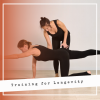
Fitness instructor coaching a client through a bird dog exercise to build core stability and support longevity training.
Marzo 14, 2026

For years, the fitness industry focused heavily on short-term goals—burn calories, lose weight, get ready for summer.

But today’s clients are asking a different, more valuable question:

How do I stay strong, mobile, and independent for the rest of my life?

Fitness instructors practicing yoga poses in a studio to improve mobility, strength, and mindful movement
Febrero 9, 2026

Movement changes lives—but yoga changes how people live inside their bodies.

For fitness instructors, earning a yoga certification isn’t about abandoning strength, cycling, Pilates, or group fitness. It’s about expanding your coaching toolkit and supporting clients in a more complete, sustainable way.

Yoga instructor learning and pracitcing online
Enero 23, 2026

Fitness professionals don’t accidentally build long, fulfilling careers—they build them by design.

Many personal trainers and group exercise instructors are planners by nature. We program weeks in advance, cue with intention, and adapt in real time for the people in front of us. Yet when it comes to our own continuing education, many of us default to reaction: enrolling late in renewal cycles, following trends, or saying yes without clarity.

Fitness instructor teaching yoga because of FiTOUR Total Access online certification courses
Enero 19, 2026

In today’s fitness industry, credentials matter — but so does adaptability. Instructors and trainers are expected to teach more formats, serve more populations, and stay current in an ever-evolving landscape. The challenge? Continuing education can quickly become expensive, fragmented, and hard to fit into a busy schedule.

That’s exactly why FiTOUR® created Total Access.

Discover 5 ways barre fitness is evolving in 2025—science, market growth, and new opportunities for fitness professionals.
Septiembre 15, 2025

By CarolAnn, MS, NCPT, CPT

Barre fitness is breaking out of its boutique studio roots and making waves across the fitness industry. Backed by science and market growth, this low-impact modality is proving its power in digital, wellness, and even rehabilitation settings. Here are five ways barre is trending in 2025—and why fitness professionals should pay attention.

Strong from the Floor Up: A Fitness Professional’s Guide to Pelvic Floor Health
Julio 14, 2025

By: CarolAnn, MS, NPCT

As fitness professionals, we recognize the importance of having strong glutes, a stable core, and effective breathing mechanics. Yet one area often overlooked in the conversation is the pelvic floor — the hidden powerhouse at the base of the core that supports posture, breathing, continence, and even athletic performance.

Improve Neuroplasticity with Dual Tasking and Skill-Based Activities
Junio 17, 2025

by Dolly Stokes, FiTOUR® Research and Development

Neuroplasticity, defined as the brain's capacity to adapt and reorganize itself, is essential for the body's movement and response to stimuli. This concept is significant in fitness, where structured training programs utilize neuroplasticity to enhance movement skills and efficiency, as well as correct dysfunctional movements. 

Páginas